Common Mistakes When Buying Crystals Online: A 10-Point Checklist
Ordering crystals online is a bit like buying a house from photographs. You can see the shape, the colour, the general character, but not the crack running along the base, the dull patch where the light doesn't catch, or the fact that the whole thing is smaller than your thumbnail. Most disappointing purchases don't come from dishonest sellers. They come from a gap between what the camera showed and what the postman delivered. That gap is usually easy to spot once you know the warning signs. Here are the ten things worth checking before you add anything to a basket.
Lighting, colour and the wet-stone trick
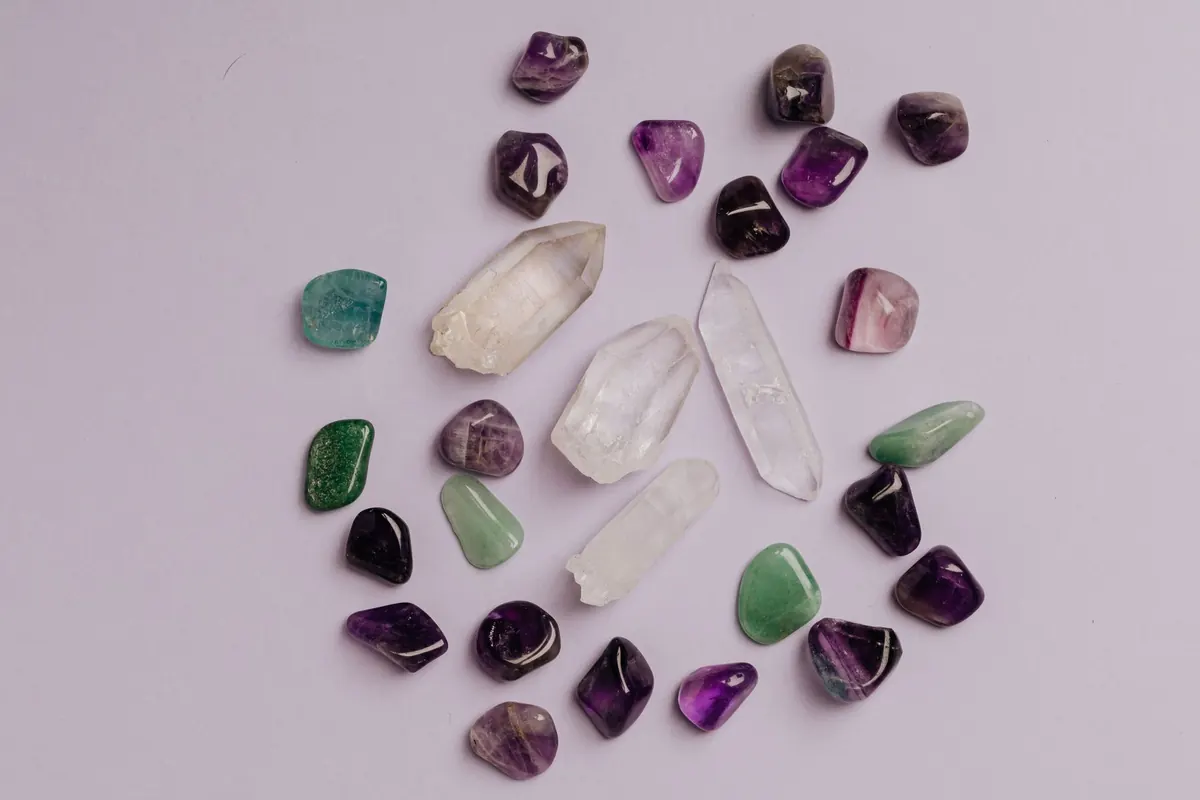
Almost every crystal listing you'll see online was shot under strong light, often with the stone damp or oiled. Water fills the tiny surface fractures and makes a rough piece look glassy. It deepens the colour and hides the cloudy patches. A polished amethyst cluster photographed wet can look like jewellery. Dry it out on a windowsill for a week and the same piece may read as a tired grey-purple.
Colour is the other giveaway. If the purple in a photograph looks almost fluorescent, the image has probably been saturated in editing or shot under a coloured lamp. Look for seller images that include a hand, a ruler or a plain white background: those are the ones taken by someone who expects you to compare what arrives with what you saw. Several shots from different angles, including the base and any chips, tell you more than one glossy hero photo ever will.
What good photos usually include
- At least three angles, including the underside and any damage.
- A neutral background or a hand for scale.
- Daylight shots or a short video, not studio lamps.
- Honest notes such as "small chip on the left edge".
Dyes, coatings and treatments
Plenty of honest crystals are treated, and there's nothing wrong with that as long as the seller says so. The trouble starts when a treatment is presented as natural colour. Dyed agate slices and dyed quartz are the classics: the colour pools in the cracks and looks too even. If you can see darker pigment sitting in a fracture line, it's dye.
Pink and purple "aura" coatings, where titanium or gold is vapour-deposited onto quartz, are man-made surfaces on natural stone, and they flake. Heat-treated amethyst sold as citrine is common, and much of what reaches the market as citrine is amethyst that has been cooked; natural citrine tends to be a paler smoky yellow with subtle colour zoning. Irradiated stones, glass sold as opalite, and resin imitations of rarer material all circulate freely.
Ask plainly: "Is the colour natural, and has the stone been dyed, coated, heated or irradiated?" A seller who answers in one clear sentence is worth your money. A vague reply about "energy" is a reason to close the tab. If you have sensitive skin, or you're buying for a child, ask what the coating is and keep treated pieces away from the mouth. If a reaction worries you, speak to a pharmacist or doctor rather than guessing.
Locality claims and provenance
"Brazilian" and "Madagascan" get attached to stones that were mined, cut and tumbled somewhere else entirely. Sometimes that's legitimate, because the material occurs in several countries. Sometimes it's because a fanciful origin sells better. Specific localities command higher prices, so the incentive to embellish is real. Amethyst from a named deposit, tourmaline from a known pegmatite: these sell on their labels as much as their looks.
You can't verify a locality from a photograph, and neither can the seller if they bought from a wholesaler. Treat a precise origin as a claim, not a fact. Ask where the information came from. A mine label? An invoice? The dealer's own field notes? If nobody in the chain can point to a source, buy the stone because you like it, not because of the name. For anything expensive, a written description on the invoice matters more than a story in the listing.
Size, weight and what "large" means
Online listings love adjectives. "Large", "chunky", "statement", "palm-sized": none of them mean anything without numbers. Always look for two figures, dimensions in millimetres or centimetres and weight in grammes. Weight is the more honest of the two, because dimension photos are easy to shoot with the stone pushed towards the camera.
A quick sanity check
Get a ruler out and hold it against your hand. A "large" tumbled stone at 30mm is a nice palm pebble; a "large" cluster at 30mm is a disappointment. Natural pieces vary, so a listing that says "you will receive a similar stone" means exactly that. Expect differences in colour, shape and inclusions. If the shop is selling the actual piece photographed, it should say so.
The ten-point checklist
- Are there multiple angles, including the base and any damage?
- Is there a hand, ruler or familiar object for scale?
- Does the seller give dimensions and weight in real units?
- Is the colour natural, and is any treatment named?
- Are locality claims sourced, or just adjectives?
- Is the stone in the photo the stone you'll receive, or a representative sample?
- Does the description mention inclusions, fractures and natural variation?
- What does the returns policy say, and are made-to-order pieces excluded?
- Do recent reviews mention colour, size or breakage, and how did the seller respond?
- Can you ask a specific question and get a straight answer?
Before you pay
Save screenshots of the listing, including the description and measurements, in case what arrives doesn't match. Pay by a method that gives you some protection if the parcel never turns up. If you're trying a new shop, start with one modest piece rather than a wholesale bundle; a small test order teaches you more about a seller than any gallery page.
Read the terms before you commit, and if a purchase is significant enough to matter financially, take proper advice rather than trusting a listing photo. Crystals are
Photo: Pexels / Pixabay