How to Clean Sterling Silver Jewellery with Gemstones Without Damaging Them
Sterling silver is a forgiving metal. It tarnishes, it polishes up again, and five minutes with the right cloth will bring back most of its shine. Set a pearl, an opal or a piece of amethyst into the middle of it, though, and the rules change. Silver dips and ultrasonic tanks — the two things most of us reach for first — are exactly what those stones cannot take. The routine below works on all four, and you almost certainly own everything you need for it already.
Before You Start: A Quick Safety Check
Look at the piece in daylight before it goes anywhere near water. Two minutes now saves a repair bill later.
- Check the setting. If a claw is bent, missing or the stone rocks slightly in its seat, stop there. Cleaning can work a loose stone free. Have a jeweller tighten it first.
- Check for glue. Pearl studs, some pendants and plenty of budget rings are glued rather than claw-set. Soaking softens adhesive, so those pieces get a damp-cloth wipe only.
- Check for treatments. Dyed, coated or fracture-filled stones — common in some agate and quartz beads — can lose colour or surface coating when they meet anything stronger than mild soap.
- Check for age. Vintage pieces often hide hairline cracks or old repairs that warm water will find.
What Each Stone Can Take
Quartz
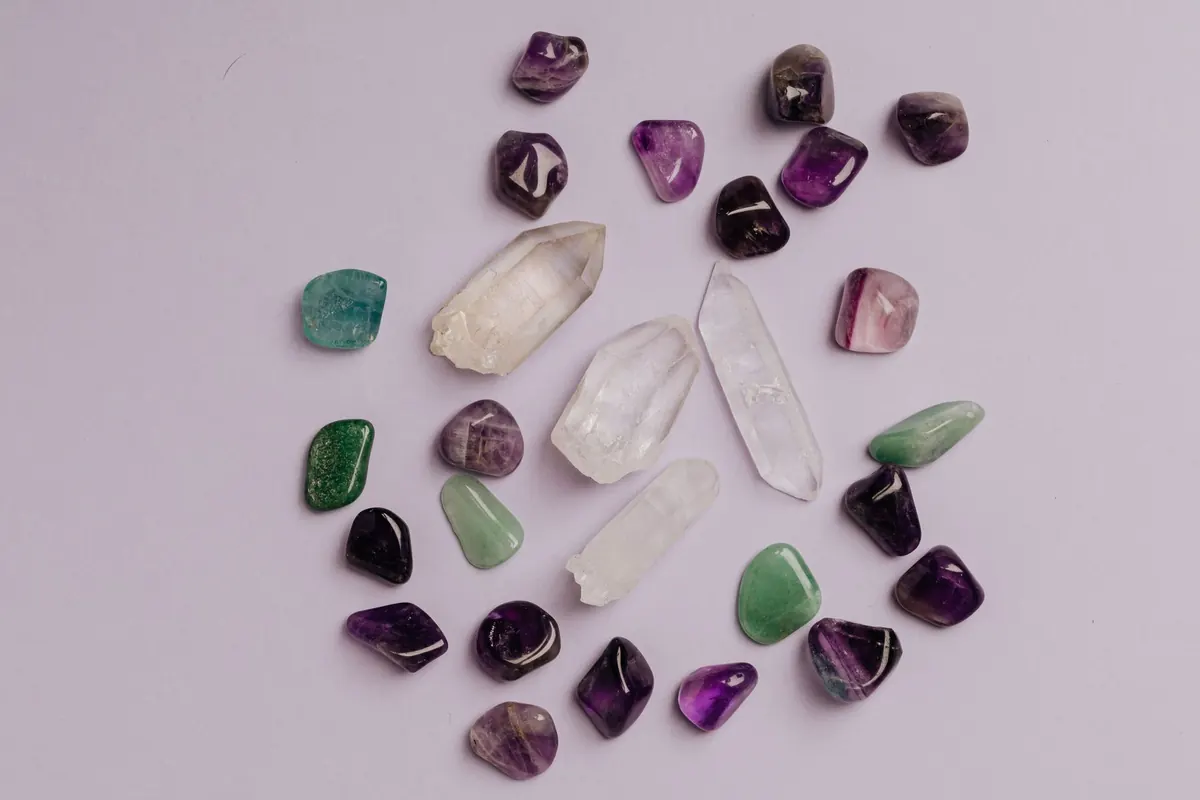
At 7 on the Mohs scale, quartz is the tough one here. Clear, smoky and rose quartz in a plain claw setting cope happily with lukewarm soapy water, a soft brush and a rinse. The limits are chemical rather than physical: skip ammonia dips, bleach and acidic cleaners. Rose quartz in particular dislikes long spells of strong direct sunlight, which can fade its pink over time.
Amethyst
Amethyst is quartz with iron in the crystal lattice, so it behaves much the same way — with one extra warning. Heat is the enemy of that purple. Steam cleaners, water straight from the kettle and a sunny windowsill in July can all take the colour down a shade. Lukewarm, never hot.
Opal
Opal is softer than quartz and holds water within its structure, which is why it reacts badly to surprises. A sudden temperature change can make it craze — fine cracks threading through the stone — and it will not forgive household chemicals. A quick wipe with a barely damp cloth, followed by a dry soft one, is all most opals need. No soaking, no steam, no windowsill.
Pearl
Pearl is the most delicate of the four, roughly 2.5 to 4.5 on the Mohs scale, and nacre is a layered mix of calcium carbonate and a protein binder. Both parts dislike acid, ammonia, chlorine and anything abrasive. Wipe pearls with a soft damp cloth after wearing, dry them flat, and put them on last when you are getting dressed — after perfume and hairspray have settled.
The Gentle Method That Works for All Four
- Fill a small bowl with lukewarm water and one or two drops of mild washing-up liquid. Not hand soap, which leaves a film, and nothing with bleach in it.
- Dip a soft brush — a baby toothbrush or a clean makeup brush — and work around the setting, under the claws and into the gaps where hand cream and tarnish collect.
- On opal and pearl, brush the metal around the stone rather than the stone face itself. A cotton bud dipped in the solution reaches crevices a brush cannot.
- Rinse by dipping the piece into a second bowl of clean lukewarm water, or hold it under a gentle trickle. Never do this over an open plug hole.
- Pat dry with a soft, lint-free cloth and leave it on a towel for ten minutes. Skip the hairdryer — heat does nothing good here.
- Buff the silver with a silver polishing cloth, keeping that cloth away from opals and pearls, which it can scratch and dull.
When Only the Silver Has Tarnished
If the stone is fine and the metal has gone yellow-black, nothing needs soaking. A silver polishing cloth used on the metal alone will lift light tarnish. For heavier tarnish in recessed areas, a little silver polish on a cotton bud, applied to the metal and wiped off straight away, does the job — but keep it well clear of opal, pearl and any porous stone.
Silver dips, ultrasonic tanks and steam cleaners are best kept for plain silver. On opal, pearl, turquoise, emerald or tanzanite, they can strip nacre, cloud a surface or loosen a setting.
The foil-and-bicarbonate-of-soda trick genuinely works on plain silver, because it reverses the tarnish chemically instead of scrubbing it away. It is a poor choice for gem-set jewellery: the water is hot, the stone gets soaked, and glued settings give way.
Everyday Habits That Save You the Work
- Put jewellery on last, once perfume, moisturiser and makeup have dried.
- Take rings off for washing up, cleaning, gardening, the gym and swimming. Chlorine and household cleaners are hard on silver and stones alike.
- Wipe pearls after every wear. Skin oils and cosmetics dull nacre gradually, and the damage is not reversible.
- Store pieces separately in a soft pouch or lined box, away from the bathroom, and away from rubber bands and wool, which release sulphur compounds that speed up tarnish.
- Drop a silica gel sachet into the jewellery box to keep humidity down.
When to Hand It Over
Take the piece to a jeweller if a claw is loose or missing, if the stone rattles, if an opal has developed web-like cracks, or if a pearl looks chalky or flaking. Heavily tarnished antique silver with fine engraving also deserves a professional eye. Restringing a pearl necklace is a job for someone who does it regularly — if the silk between the pearls looks stretched, grey or frayed, book it in before a pearl goes missing.
And if the piece is valuable, ask before you experiment. The routine here is deliberately gentle, so it is a sensible default for everyday jewellery, but someone who can see the stone in person will always give better advice than a general guide.
Photo: cottonbro studio / Pexels