How to Store Your Crystal Collection: A Checklist to Prevent Scratches, Fading and Chipping
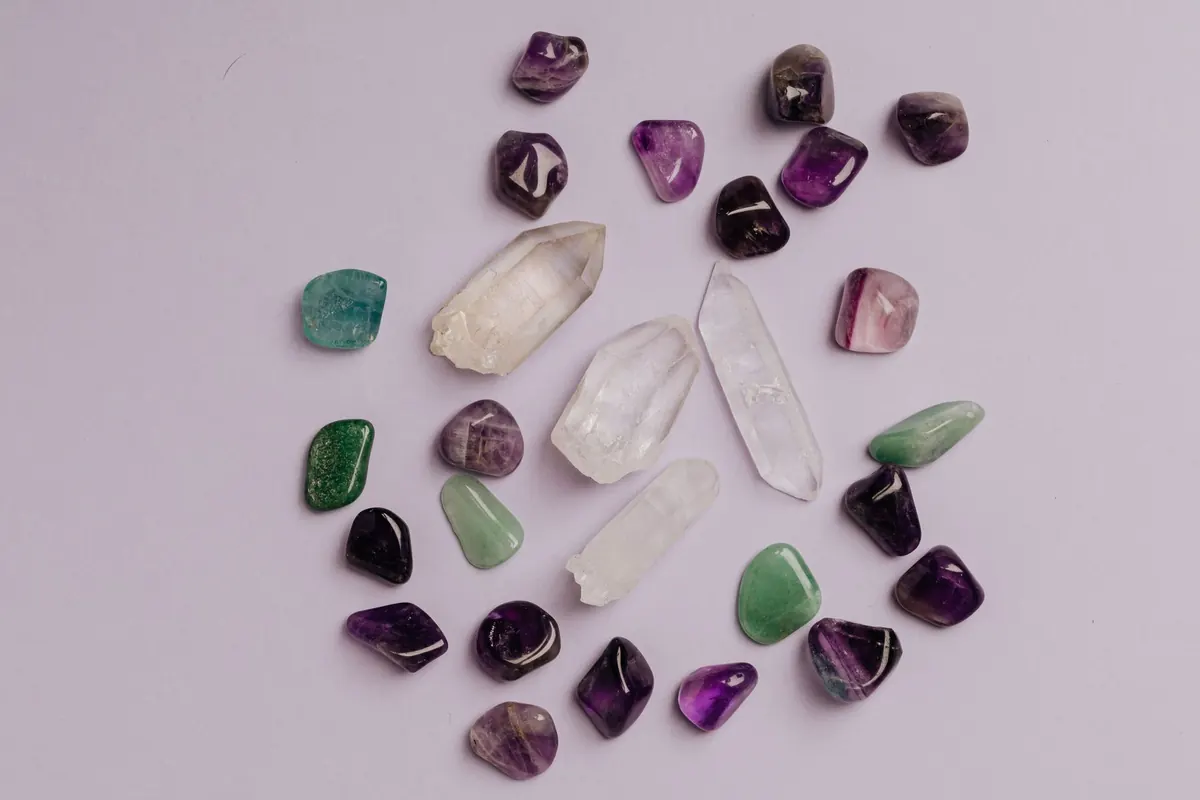
Most crystal collections aren't ruined in one dramatic moment. They're ruined slowly: a scratch from tumbled stones rattling together in a jar, a patch of amethyst that goes grey on a sunny windowsill, a chip on the corner of a fluorite octahedron that spent a year pressed hard against a quartz point.
None of that has to happen. A little thought when you put pieces away is usually all it takes to keep them looking the way they did the day you brought them home.
Start with the room, not the box
A closed cupboard in a spare room beats a glass shelf on a south-facing windowsill every time. The four things that cause most damage are light, damp, dust and temperature swings, and certain rooms in a typical UK home supply all four at once.
Conservatories bake in summer and turn cold and clammy in winter. Lofts and garages swing wildly between the seasons. Bathrooms and kitchens add steam and grease. Shelves directly above radiators create hot, dry air that isn't good for much either. A wardrobe shelf, a drawer unit in a bedroom, or a cabinet away from the window will serve you far better.
Stability is the goal, so borrow a hygrometer and see what your chosen spot actually reads. If humidity drifts above about 60%, add rechargeable silica gel sachets or a small dehumidifier; many collectors aim for roughly 45–55%. Leave a finger's width of air between storage boxes and outside walls, since a box pressed against a cold wall can attract condensation.
Wrap each piece for the mineral it actually is
Quartz, beryl, corundum and agate sit at hardness 6–9 and will survive a plain box and each other. Calcite, fluorite, malachite, gypsum, selenite and talc are soft, often cleaved and sometimes brittle. Those need cushioning and separation, not just a lid.
The useful kit is short and cheap:
- Acid-free tissue paper for wrapping individual specimens and lining drawers. Ordinary tissue and newspaper are acidic, and newsprint transfers.
- Soft cotton or calico bags for tumbled stones, which stay apart without adding bulk.
- Closed-cell polyethylene foam, sold as Plastazote, which cuts cleanly and doesn't crumble the way grey packing foam does after a few years.
- Compartment trays and small padded boxes — the single best purchase for a large tumbled collection. Stones rolling against one another is the classic way to dull a polish.
- A soft brush for dusting before anything goes away.
Skip cling film, elastic bands and sticky tape on the crystal itself. Bubble wrap is fine around a sturdy lump of rough quartz, but not against a soft or porous specimen, where the texture can leave marks and old wrap can turn tacky. Above all, don't over-tighten. Cushion, don't compress — pressure is what causes chips.
Light: how colour quietly disappears
Amethyst, rose quartz, kunzite, fluorite, blue topaz, citrine and smoky quartz can all lose colour when they sit in bright sunlight, and it often happens over months rather than years. Faded colour rarely comes back. Direct sun through glass also builds heat, and heat plus a cleaved specimen is a reliable route to a chipped corner.
Keep the most light-sensitive pieces in a closed box or drawer and bring them out for a few weeks at a time rather than permanently. North-facing shelves are gentler than south-facing ones. If you use display lighting, choose LEDs, which run cooler and emit far less ultraviolet than halogen bulbs, and switch them off when the room is empty.
Humidity and heat: the specimens that suffer most
Damp does more damage than most people expect. Selenite and halite are water-soluble and will slowly spoil in humid air, and halite pulls moisture straight out of it. Pyrite and marcasite can develop what collectors call pyrite decay, crumbling and giving off acidic residue; keep those dry, in their own box, away from other specimens and anything metal.
Opal is the opposite case. It prefers stable conditions, and very dry air can bring on crazing, so a hot airing cupboard is a poor home for it. What almost every mineral dislikes is a rapid change of temperature, which can crack cleaved pieces through thermal shock.
Silica gel sachets stop working after a few months and need recharging in a low oven, so note the date and repeat it twice a year. Never seal a damp specimen into a box; let it dry at room temperature first. If a piece is friable, dusty or contains lead or arsenic-bearing minerals, wear nitrile gloves, work over a tray, and wash your hands afterwards. For anything health-related, including crystal elixirs, speak to a qualified professional rather than relying on a stone.
Label everything, as you go
You will forget where that green one came from. Give every specimen a number, then keep one index — a notebook or a spreadsheet — listing the name, locality, date acquired, source and any treatment. A specimen with a locality card is more interesting and usually more valuable than the same piece without one, so record it before the details blur.
Keep the label with the piece rather than in a separate file. A slip of acid-free card written in pencil inside the box works well, because pencil doesn't run if it gets damp. Don't write on the mineral itself and don't stick tape to it. Photograph each item beside its number on your phone; that image will identify things faster than any description.
Dust, handling and the display trade-off
Every open shelf is a compromise: it looks lovely and it collects dust, which is abrasive. When you clean, use a soft brush rather than a cloth, since a cloth drags grit across the surface. Avoid water on water-soluble or metal-bearing specimens, and never put a crystal in an ultrasonic cleaner or use household cleaners on it — a cleaved piece can shatter.
Handle with clean, dry hands for most pieces; they give better grip than gloves on rough specimens. Reserve gloves for friable or potentially toxic material. Lift by the body of the specimen, not a protruding point.
A quick storage checklist
- Choose a dark, dry, stable cupboard away from windows, radiators, bathrooms and garages.
- Check humidity with a hygrometer and add silica gel or a dehumidifier if it climbs.
- Sort the collection into hard pieces and soft, brittle or cleaved pieces.
- Wrap soft pieces individually in acid-free tissue or foam.
- Bag tumbled stones separately; never let them rub together.
- Box water-soluble, pyritic and opal specimens on their own, away from metals.
- Number every piece and record the details in one index.
- Keep the label in the box, in pencil, never taped to the stone.
- Rotate light-sensitive pieces instead of displaying them permanently.
- Dust with a soft brush, and recharge the silica gel twice a year.
Do that and, a decade from now, your collection will look much as it does today — which is the whole point.
Photo: tianya1223 / Pixabay