Quartz vs Amethyst vs Rose Quartz: What's the Difference and Which Should You Buy?
Ask three crystal collectors to name their first stone and you will usually hear one of these: clear quartz, amethyst or rose quartz. They look nothing alike — one glassy and colourless, one purple, one soft pink — yet all three are the same mineral, silicon dioxide, with the same crystal structure. That shared chemistry explains why they behave so similarly in jewellery, and why the differences that actually matter come down to colour, clarity and the way each stone tends to grow.
One family, three colours
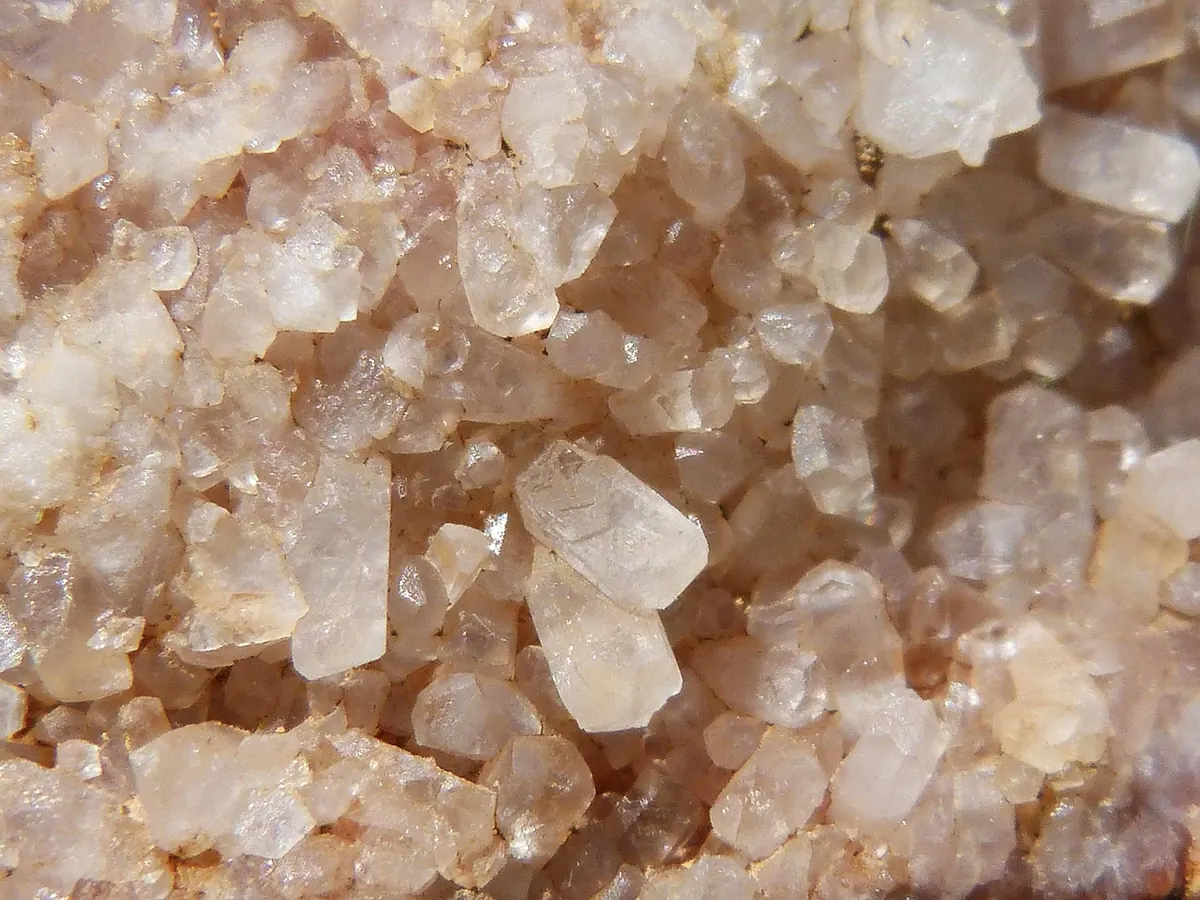
Quartz is one of the most abundant minerals in the Earth's crust, and it likes to grow in hexagonal prisms with pointed tips. In its purest form it has no colour at all, which is why clear quartz is still often called rock crystal. Introduce trace amounts of iron and let natural radiation work on the stone over a very long period, and you get amethyst's violet. The pink of rose quartz comes from trace elements such as titanium, iron or manganese, and many pieces contain fine rutile needles that lend the stone its characteristic cloudiness.
Which means the "quartz versus amethyst" question is a bit like asking apples versus Granny Smiths. Amethyst is quartz. Rose quartz is quartz. What changes is the impurity, the growing conditions, and how those affect the way you buy and look after the finished stone.
Appearance: telling them apart at a glance
In a shop or at a market stall, the three are easy to separate by eye — until you meet the awkward pieces.
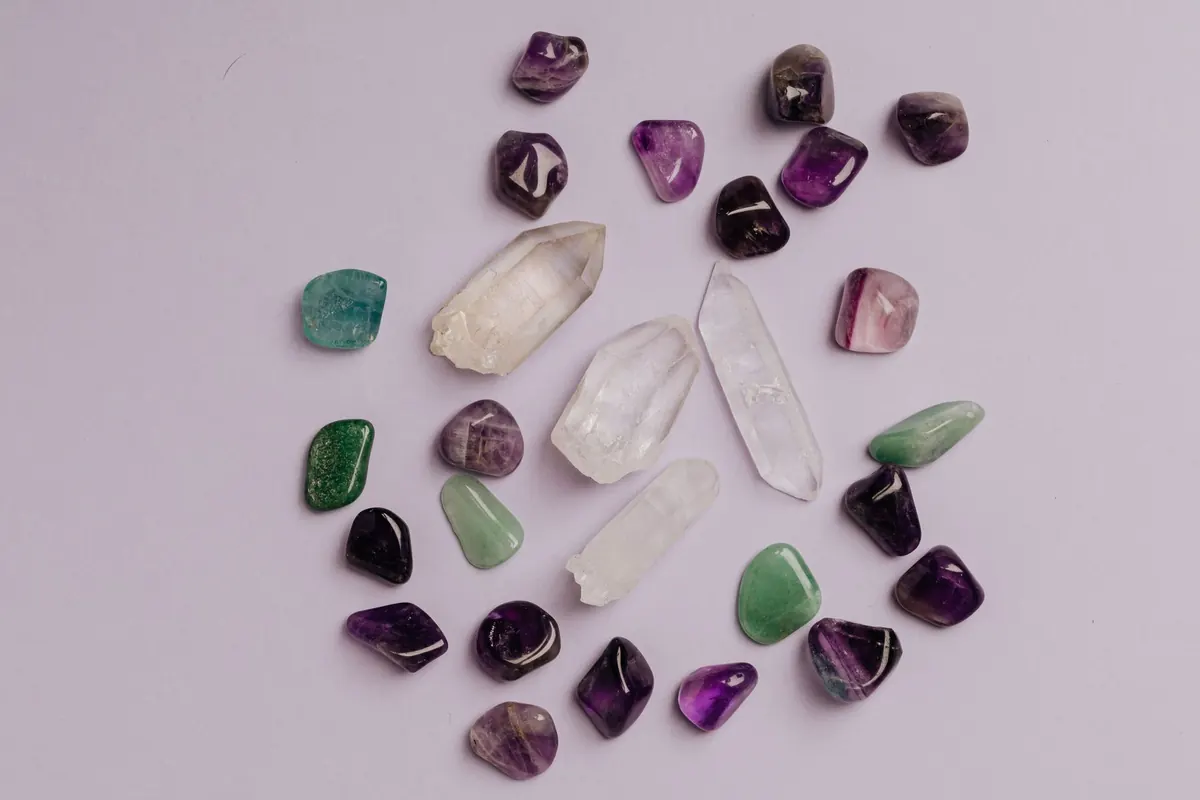
- Clear quartz is transparent to milky, with a bright glassy lustre. Faceted stones sparkle with white light rather than colour. You may see inclusions: golden rutile needles, green chlorite, ghostly phantom outlines, or a faint smokiness near the tip.
- Amethyst ranges from pale lilac to a deep, saturated violet. Look closely and colour is often banded or zoned, darker at the crystal's tip and paler near the base. Deep purple material tends to look almost black in dim indoor light, which is worth checking before you buy.
- Rose quartz is pink, usually translucent to cloudy rather than fully transparent, and most often cut from massive material with no visible crystal faces. Star rose quartz, cut as a smooth cabochon, shows a six-rayed star in direct light.
A quick test: hold the stone against a white sheet of paper. Amethyst keeps its purple, rose quartz looks softer and milkier than you expected, and clear quartz simply disappears into the page. Amethyst is also heat-treated in large quantities to produce citrine, so if you are offered a yellowish stone sold as "quartz", ask what it actually is.
Hardness and durability: what 7 on the Mohs scale means
All three sit at 7 on the Mohs hardness scale, which is respectably tough. Quartz will scratch window glass and most everyday metals, so it survives keys, coins and desk drawers far better than softer stones such as opal or fluorite. It is also brittle rather than soft: quartz has no cleavage, so it fractures in curved shells when struck rather than splitting along flat planes.
Hardness is not the same as toughness, though. Rose quartz frequently carries internal fractures that make bead holes and thin edges more likely to chip. Amethyst's colour can fade with long exposure to strong sunlight, and rose quartz is often reported to do the same. If you are cutting, grinding or tumbling any quartz, work wet and wear proper respiratory protection — silica dust is a genuine hazard, not a hypothetical one.
What each stone is usually used for
Clear quartz is the all-rounder. It facets beautifully, takes a high polish, and looks at home in a plain silver band or beside coloured stones. It is also the stone most often carved into spheres, points and animals, and the material behind the quartz oscillators in watches and electronics — though that is lab-grown, not dug from the ground.
Amethyst is February's birthstone and the natural choice when you want a stone that reads clearly as a gem. It suits rings, pendants and earrings, and larger pieces become bookends, carved owls and cathedral geodes on a shelf.
Rose quartz is at its best in beads, bracelets, tumblers, palm stones and generously sized carvings, partly because opaque pink material is affordable in big pieces. If you want facet-grade transparent pink, expect to pay considerably more and to see far less of it.
Many people also keep these stones for their reputed calming or comforting qualities. That is a personal matter, and a pleasant one, but crystals are not medicine. For any health concern, speak to a qualified professional rather than relying on a stone on your windowsill.
Care and cleaning
The routine for all three is gentle and quick.
- Dust with a soft dry cloth or a clean make-up brush before anything wet touches the surface.
- Wash in warm water with a drop of mild washing-up liquid, using a soft toothbrush around settings and bead holes.
- Rinse well and pat dry with a lint-free cloth, then leave to air for an hour before storing.
- Store each piece separately in a soft pouch or a lined compartment, so harder stones cannot grind against each other.
What to avoid matters more than what to do. Skip ultrasonic and steam cleaners on heavily included, carved or fracture-filled pieces, and keep bleach, ammonia and chlorine away from beads and metal fittings. Never move a stone from a hot windowsill to cold water — thermal shock is a common cause of cracks. Long, direct sunlight is best avoided for amethyst and rose quartz display pieces, and salt soaks are unnecessary and can dull a polished surface. If you enjoy cleansing routines, water and moonlight are safe for all three; sunlight and salt are not.
Which should you buy?
Choose by how you will actually use it, not by which stone sounds more impressive.
- Want one stone that goes with everything, or a large piece for a modest budget? Clear quartz is the practical pick, and inclusions such as rutile or phantoms add interest without adding fragility.
- Buying for colour? Look for amethyst with even saturation and no washed-out "windowing" where light passes straight through the middle. Check it indoors and near a window.
- After something soft, affordable and easy to wear daily? Rose quartz beads and cabochons are hard to beat. Accept the cloudiness rather than paying extra to fight it.
For a ring you will wear constantly, ask for a bezel or a protective setting: at Mohs 7 these stones resist scratching but still chip at exposed corners. Buy the piece you keep reaching for, treat it kindly, and any of the three will look good for years.
Photo: makamuki0 / Pixabay